Table of Contents
Everybody experiences grief in different ways. Your experience of grief and how you deal with it will certainly depend on different aspects. These may include your age, previous experiences with grief and your spiritual or religious views.
Awaiting grief means sensation depressing before the loss occurs. As opposed to grieving for the person, that is still with you, you might really feel despair for things you won't obtain to do with each other in the future. When encountering a significant loss, such as the fatality of an enjoyed one, it is all-natural to feel many strong emotions.
This doesn't indicate you have actually provided up on the individual or that you uncommitted for them. Individuals diagnosed with an incurable ailment and those dealing with the fatality of an enjoyed one might experience awaiting despair. If you have been identified with a terminal illness, you might experience many feelings including shock, fear and unhappiness.
Nervous System Restoration for PTSD & Trauma Specialists in Los Angeles
You regret shed opportunities or experiences you'll miss also tiny ones, such as the satisfaction of the sunshine or a hot mug of coffee. If a person you love is encountering an incurable illness, it prevails to experience awaiting grief in the months, weeks and days prior to death. You might regret the same things your loved one is grieving, or various losses completely.
You may really feel that the individual you knew is currently gone, also if they are still literally there. If your liked one has a decline in physical wellness or wheelchair, you might feel awaiting despair as you shed the opportunity to share experiences, such as leisure activities, holidays or occasions.
This is specifically real if you spend a great deal of time caring for the individual. You might miss out on tasks you utilized to appreciate with each other and really feel grief regarding the adjustment in your partnership. The nature of your relationship may alter as you handle a carer's role, or come to be the one being looked after.
Feelings of despair before fatality are regular it is very important to identify them, and to chat regarding them. Experiencing awaiting pain doesn't necessarily suggest that you will grieve your enjoyed one any much less after they are gone. Carers of individuals that are terminally ill may come to be better to their liked one, making their feelings of sorrow after death a lot more intense.
IFS Therapy: Understanding Your Sub-Personalities
Lifeline offers support for people experiencing psychological distress. Past Blue gives information and assistance for individuals experiencing psychological health and wellness difficulties including despair. Griefline Call 1300 845 745 for support readily available to adults aged 18 years and over. Mensline gives telephone and online counselling and support to men in Australia. Cancer Council offers information and support to individuals with cancer cells and their enjoyed ones.

Check out the CareSearch site for links to palliative care and end-of-life details in a variety of neighborhood languages. Call Carer Gateway on 1800 422 737 for sources to sustain for Indigenous and/or Torres Strait Islander carers and areas. CareSearch offers details on recognizing bereavement, end of life and palliative treatment requirements of the LGBTIQA+ neighborhood. In fact, we do not experience sensations of despair one at a time or in a certain order. You may experience these things due to the fact that they are all typical sensations of grief.
It's normal to really feel various other points also, such as shock, stress and anxiety, exhaustion, or shame. Some individuals really feel numb after the fatality of a person they appreciated. They may even try to continue as though nothing has actually happened. If you experience this, it might be since it's just also unsubstantiated that the individual you recognize so well is not coming back.
Healing Performance Pressure to Balanced Achievement
Possibly they promise themselves that they will certainly now constantly do (or not do) something, believing that it could make the individual that has passed away returned. Or perhaps they believe it will quit anyone else dying or various other bad points taking place. This is occasionally called 'magical reasoning'. People might likewise discover that they keep returning over the past and ask lots of 'what happens if' inquiries, wishing that they could go back and change points to make sure that they could have turned out in a different way.
These feelings can be very extreme and excruciating, and they might come and go over numerous months or years. However most individuals locate that excruciating sensations such as this come to be less solid with time. If you do not feel this is the situation for you, after that you need to request assistance.
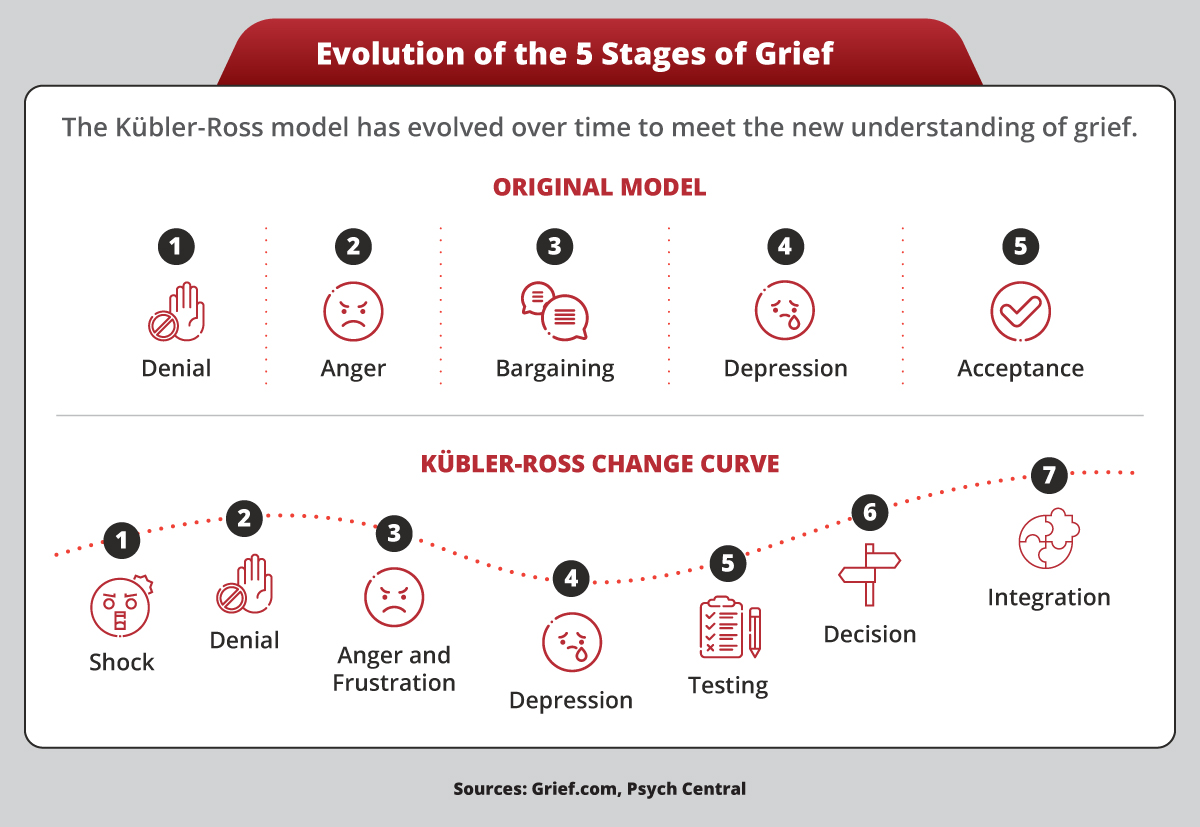
Her design became widely accepted as a means to recognize pain, yet in time, sorrow counsellors and researchers broadened upon it, bring about the advancement of the. This prolonged model integrates added emotional responses that people might experience: The initial reaction to loss usually brings shock and disbelief. This stage serves as a protective mechanism, allowing us to soak up the fact of our loss in workable dosages.
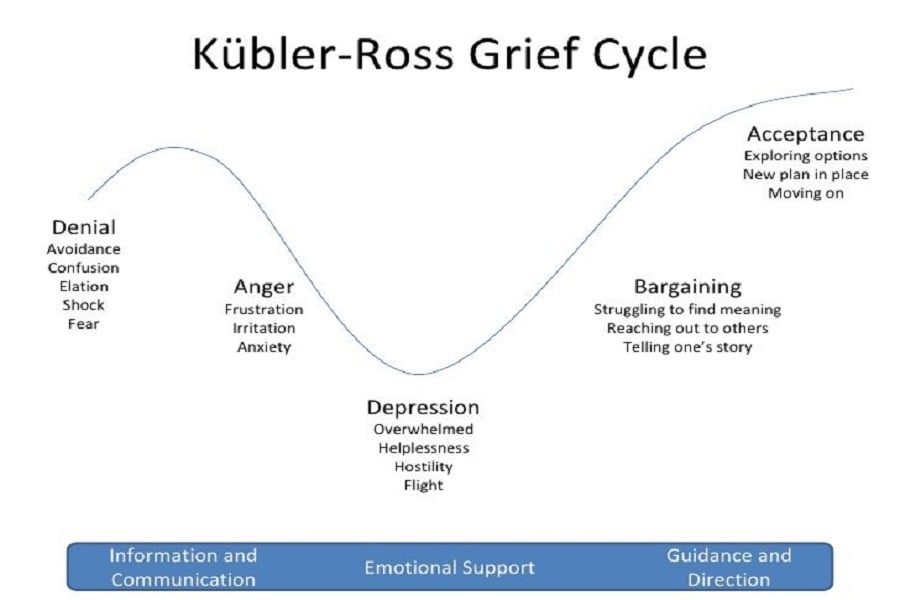
Sensations of regret or shame may arisewondering if you can have done something in different ways, or feeling grief over points left unsaid. Grief can show up as angertoward on your own, others, or even the individual that has actually passed.

Navigation
Latest Posts
When Psychodynamic Counseling Facilitates Growth for Intake and Assessment Services
The Path of Change During Relationship Therapy
The Mind-Body Connection in Intergenerational Trauma